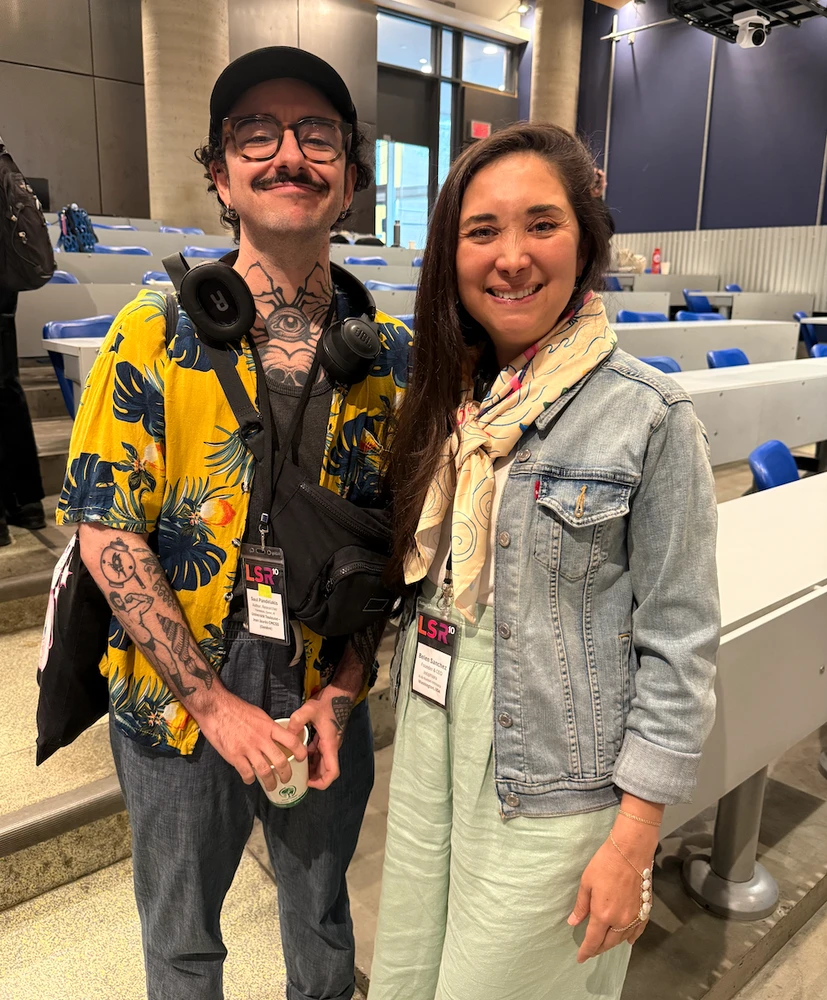
While the Love & Sex with Robots conference had been on our radar for a long time, we had never had the opportunity to attend before.
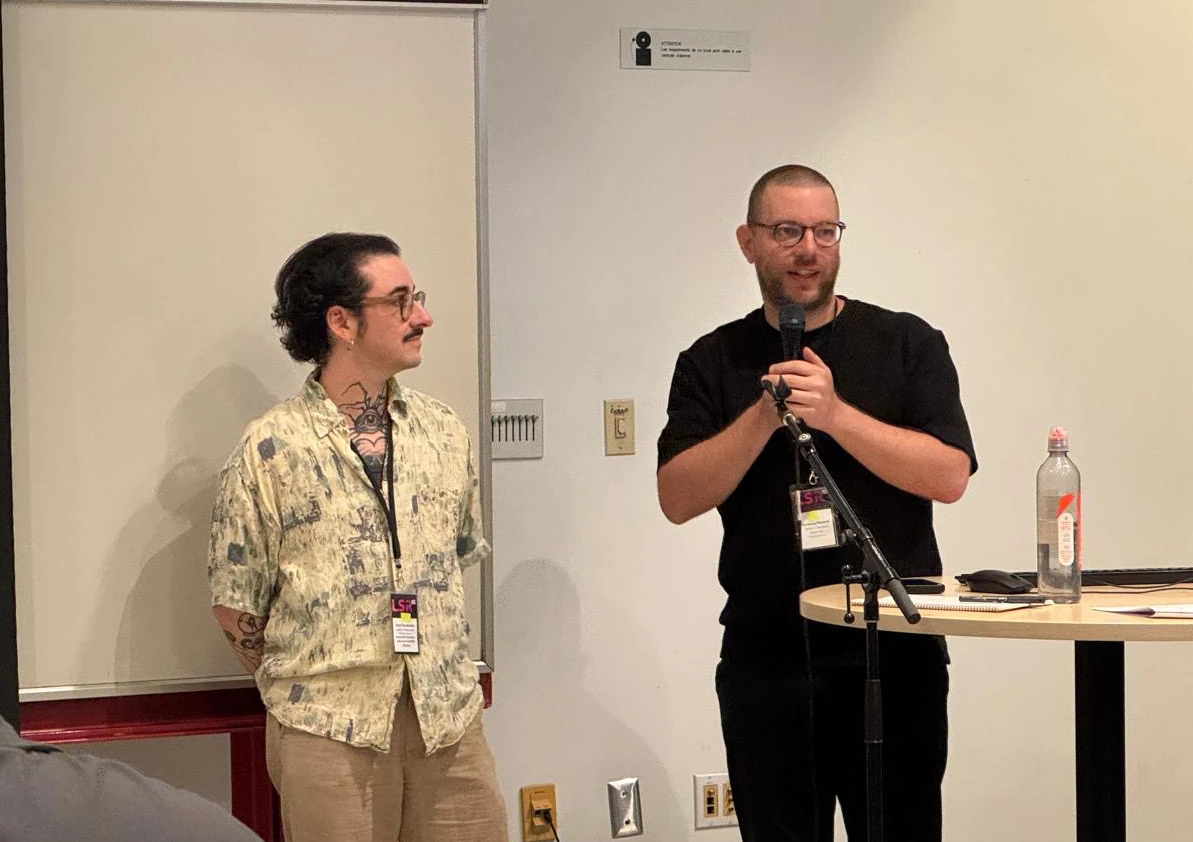
This oversight has now been corrected, as we (Anthony Masure and Saul Pandelakis) were able to make the trip this summer 2025 to UQAM in Montreal to attend the tenth edition of the LSR conference.
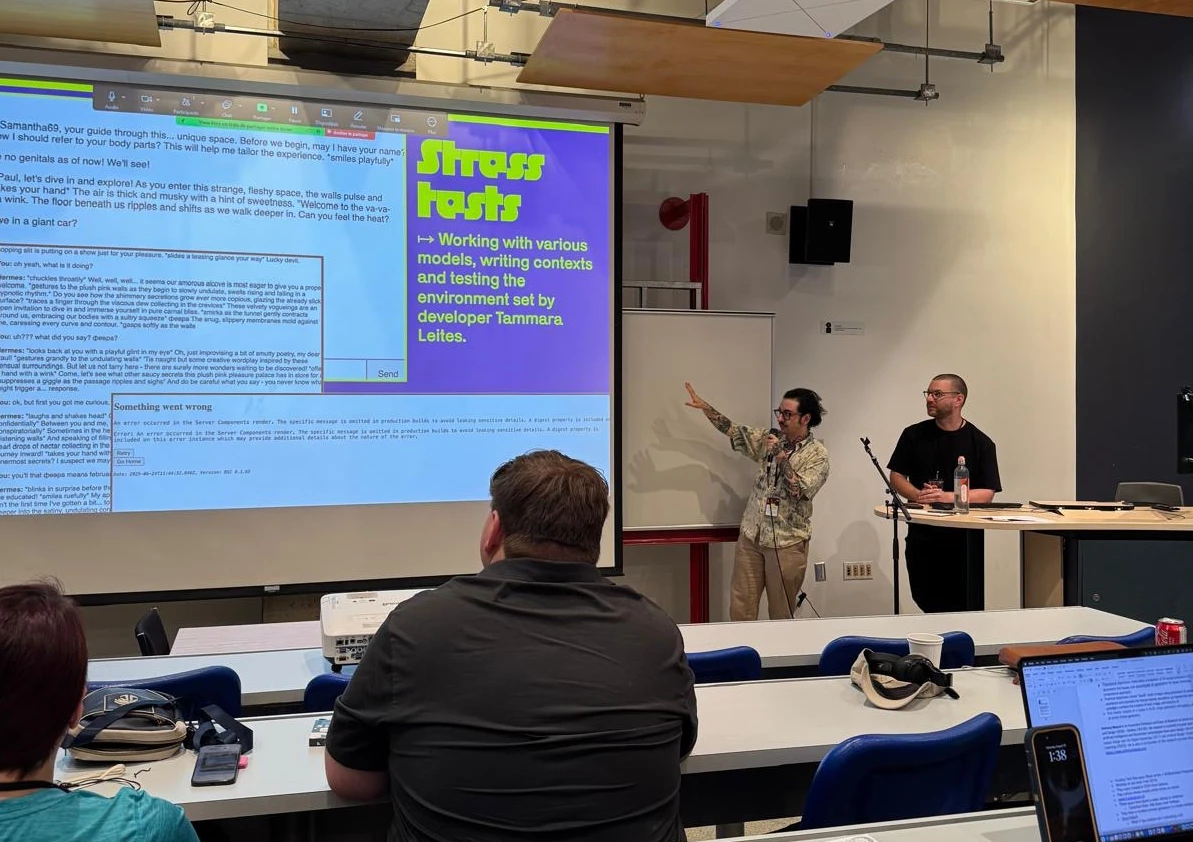
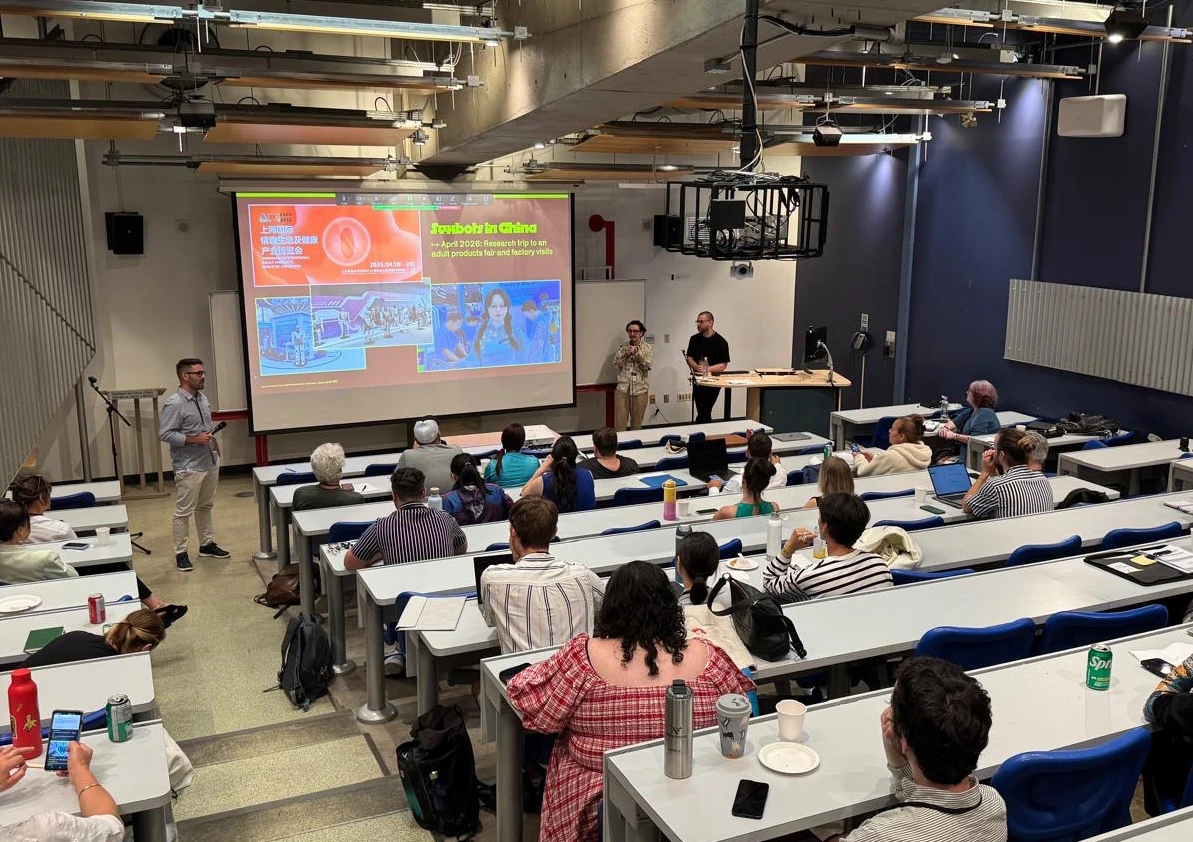
The program featured many presentations across a variety of disciplines: sociology, anthropology, medicine, criminology, cultural studies, etc. We gave an overview of the Fucking Tech! project and brought our design perspective, as well as introduced our prototype erotic story generator StoryTellurX.
Since our colleague Belén Sanchez Hidalgo has written a very comprehensive report about the conference, we wanted to publish a shorter post here—a “post-conference” reflection highlighting the ideas that were stirred in our minds while listening to our colleagues. One thing is for sure: this excellent symposium was of the highest level and will greatly influence our research and the ongoing writing of our book on this topic.
Fascinating subjects were raised. Among them, important ethical considerations, frequently contextualized within a “loneliness epidemic.” For our part, this terminology still needs to be questioned. Compared to what previous state are we more alone than before? Are the metrics we use comprehensive and detailed enough to assert such a thing unilaterally? Moreover, doesn’t using this motif to introduce the question of sexbots risk closing off their conception, reducing these devices to mere palliatives, which they are not necessarily? Finally, we are also somewhat wary of characterizing complex social phenomena as “epidemics.” We know how much viral rhetoric is mobilized by the far-right to denounce foreigners, the left, or LGBTQIA+ people. Are we, as researchers, really sure we want to use this terminology?
We were also very stimulated by all the conversations about regulation. Between copies of existing people and possible pedophilic abuses, sexbots indeed call for a focus on legislature. However, Anthony and I had numerous conversations about this during the conference. By saying “regulate,” aren’t we endorsing a fait accompli where sexbots exist, when this is not the case? In doing so, aren’t we congealing a context that is still malleable? In other words, we are increasingly alert to the use of the term “regulate.” It appears to us that this term obscures another necessity—that of designing, conceiving, giving shape.
We greatly appreciated the speakers’ efforts to provide a more open vision of the gender and sexual identities of sexdoll users. For example, speaking of cisgender male users is a salutary precision that avoids creating generalizations. This also opens perspectives for “queer” uses of sexdolls. However, we note that research still focuses mainly on heterosexual and cisgender cohorts. This may be because these are indeed the actual users of sexdolls today. But if studies on sexdolls maintain this focus, they could well participate in a self-fulfilling prophecy: if only heterosexual and cisgender uses are documented, the documentary base on sex dolls (and other robots) will be limited to these populations, which will in turn limit design efforts.
Finally, the question of imitation was raised, but we wish, in the context of designing StoryTellurX, to tackle it even further. Why do we always start from the principle that sexdolls/sexbots must copy humans, in appearance and behavior? This is one of the central questions for the Fucking Tech! project. The majority of science fiction imaginaries, and the essential part of the existing commercial offering, propose anthropomorphic representations of sex dolls. These representations rest on the a priori assumption that robotic sexuality “replaces” sexuality with a human. In a feedback effect that borders on an endless loop, these images consolidate the idea that the sexbot is desirable as a substitute. This perspective is very limited and it seems important to us that research on sex and robotics not participate in this impoverishment of imaginaries by internalizing a state of affairs which is in no way immutable—provided we reposition the sexbot as a product typology still under development , open to conception processes and re‑design.
A big thank you to Simon Dubé, Bobbi Bidochka and the entire organizing team for this wonderful academic and social moment!
Videos of the conference :
Jour 2 [ le jour où nous avons présenté :) ]