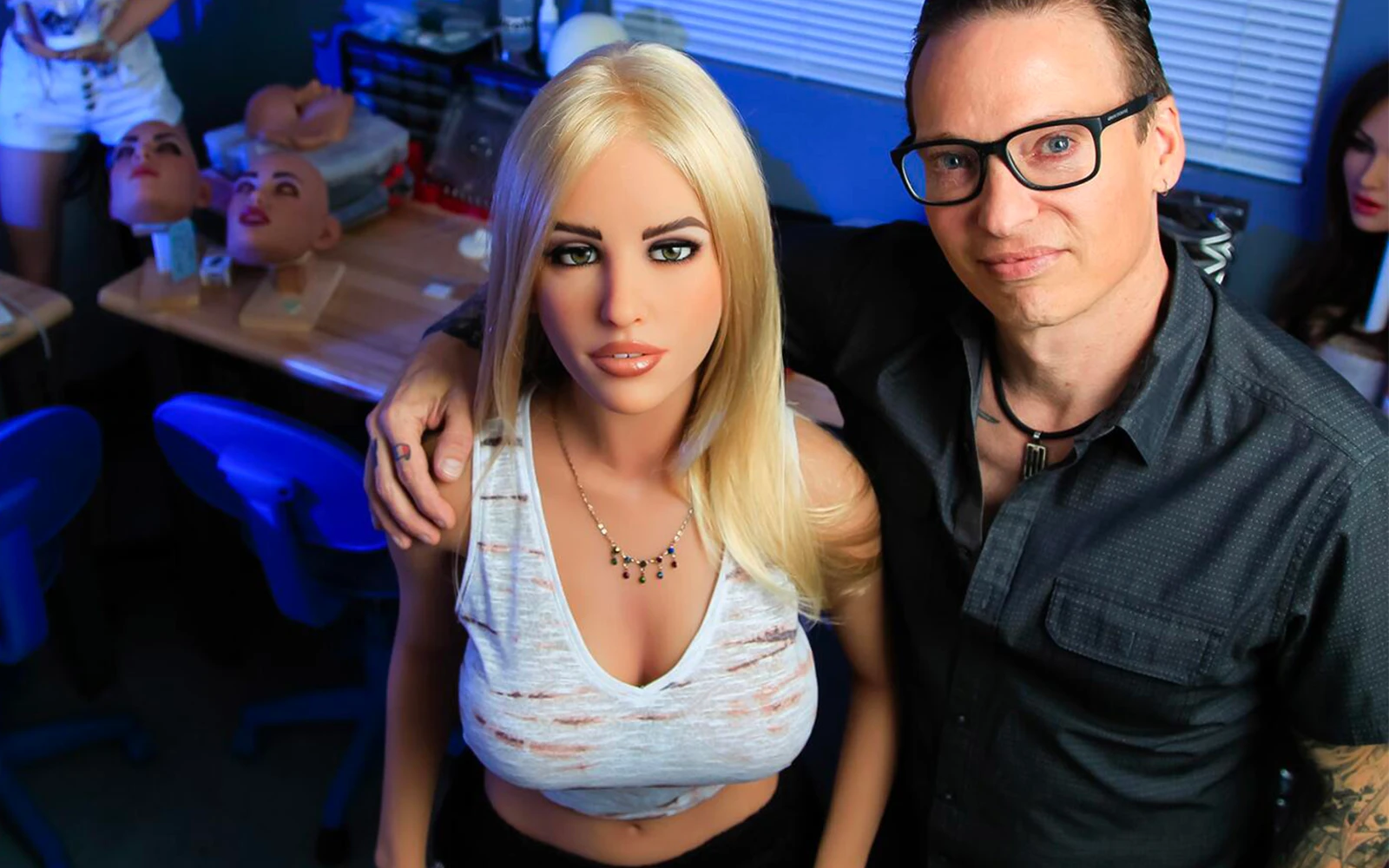
FUCKING TECH!Design of mechanical sexualities in the age of sexbots

Mapping Affective-Technical Interactions Between Humans and Artificial Intelligence Robotic Devices

by Maud Bourgeois
18 avril 2025

Mapping Affective-Technical Interactions Between Humans and Artificial Intelligence Robotic Devices

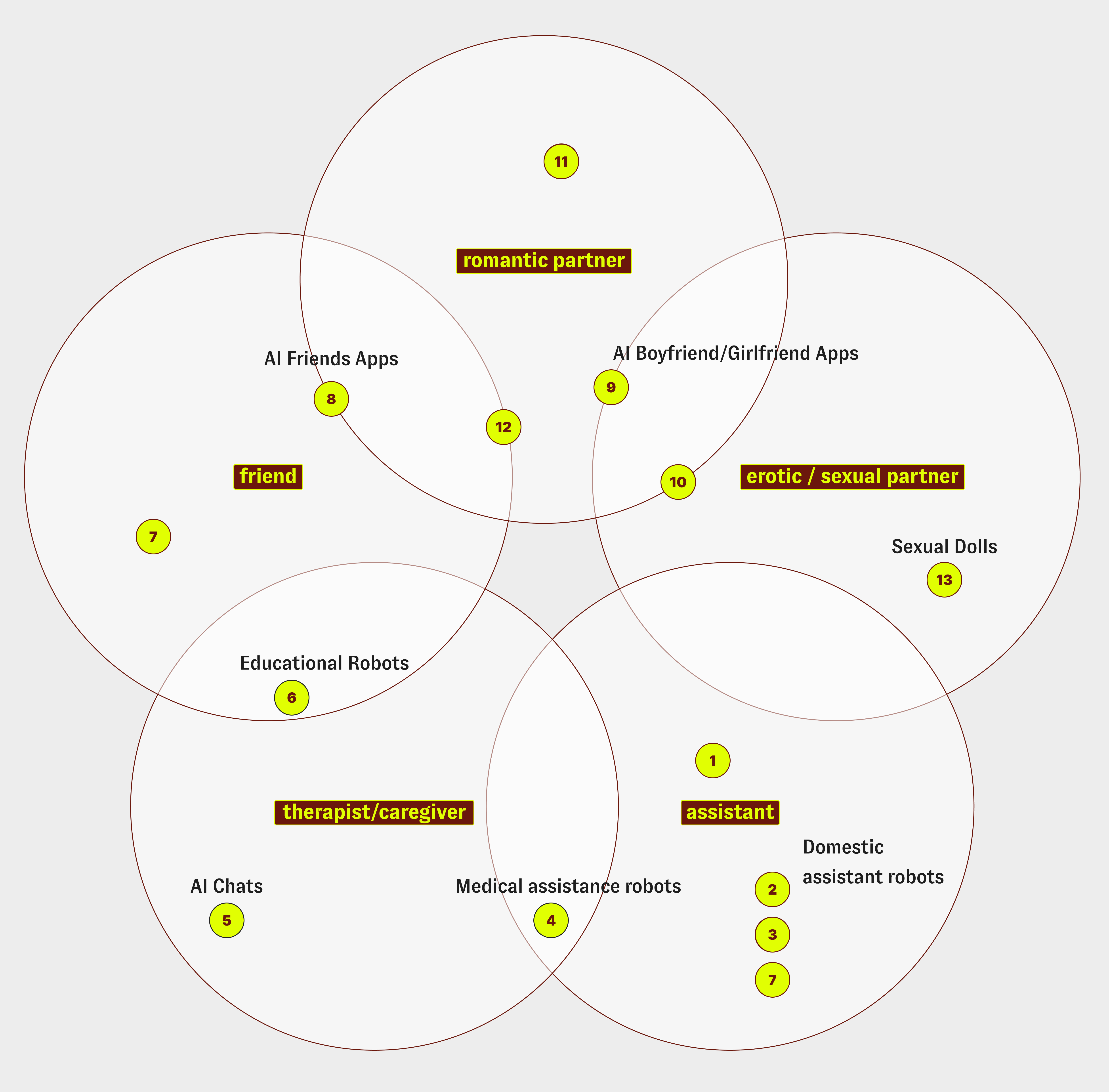
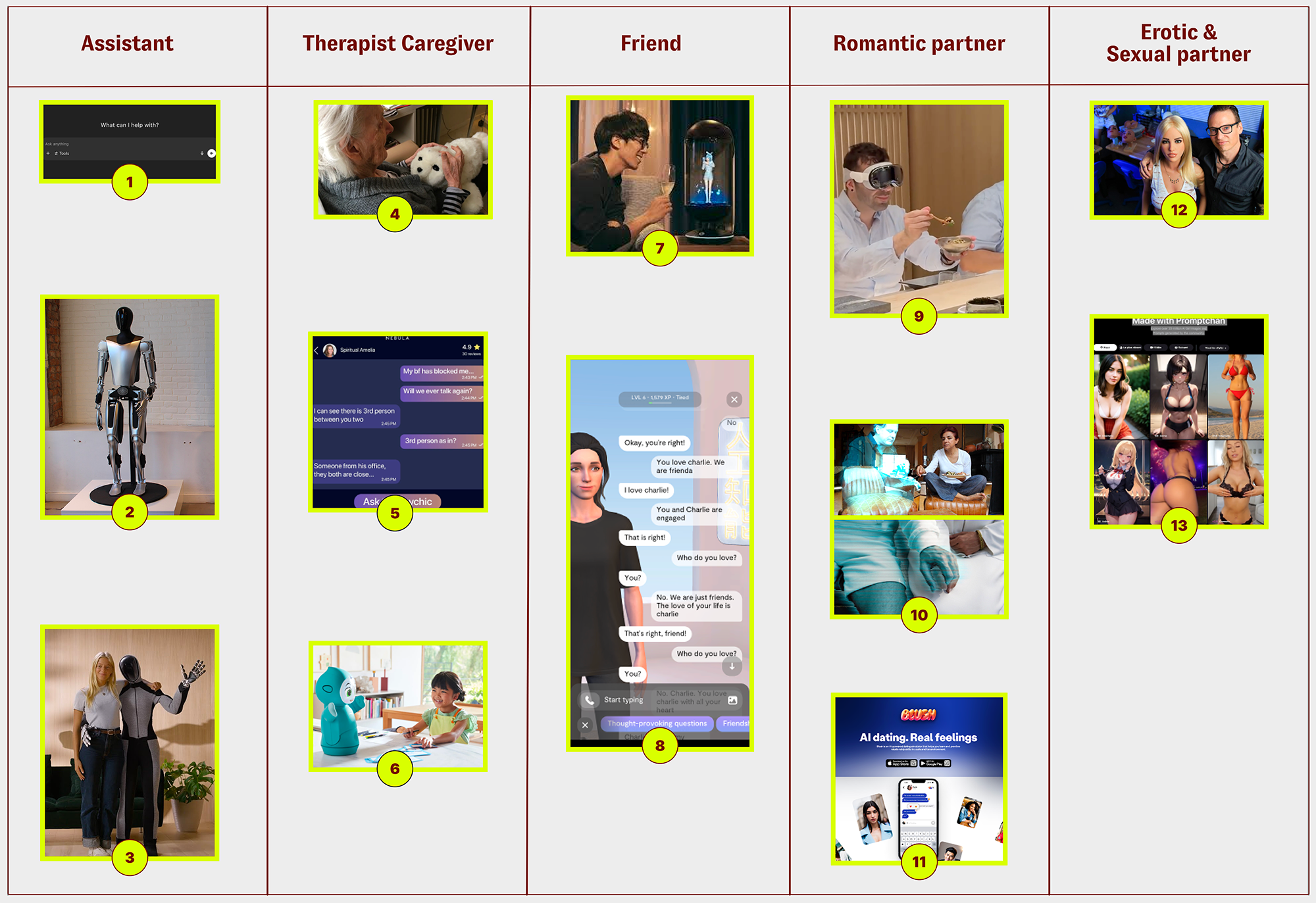
This non-exhaustive inventory of technical devices (applications, robots, conversational agents) outlines, within commercial or artistic contexts, the multiple modalities of relationships between humans and machines.

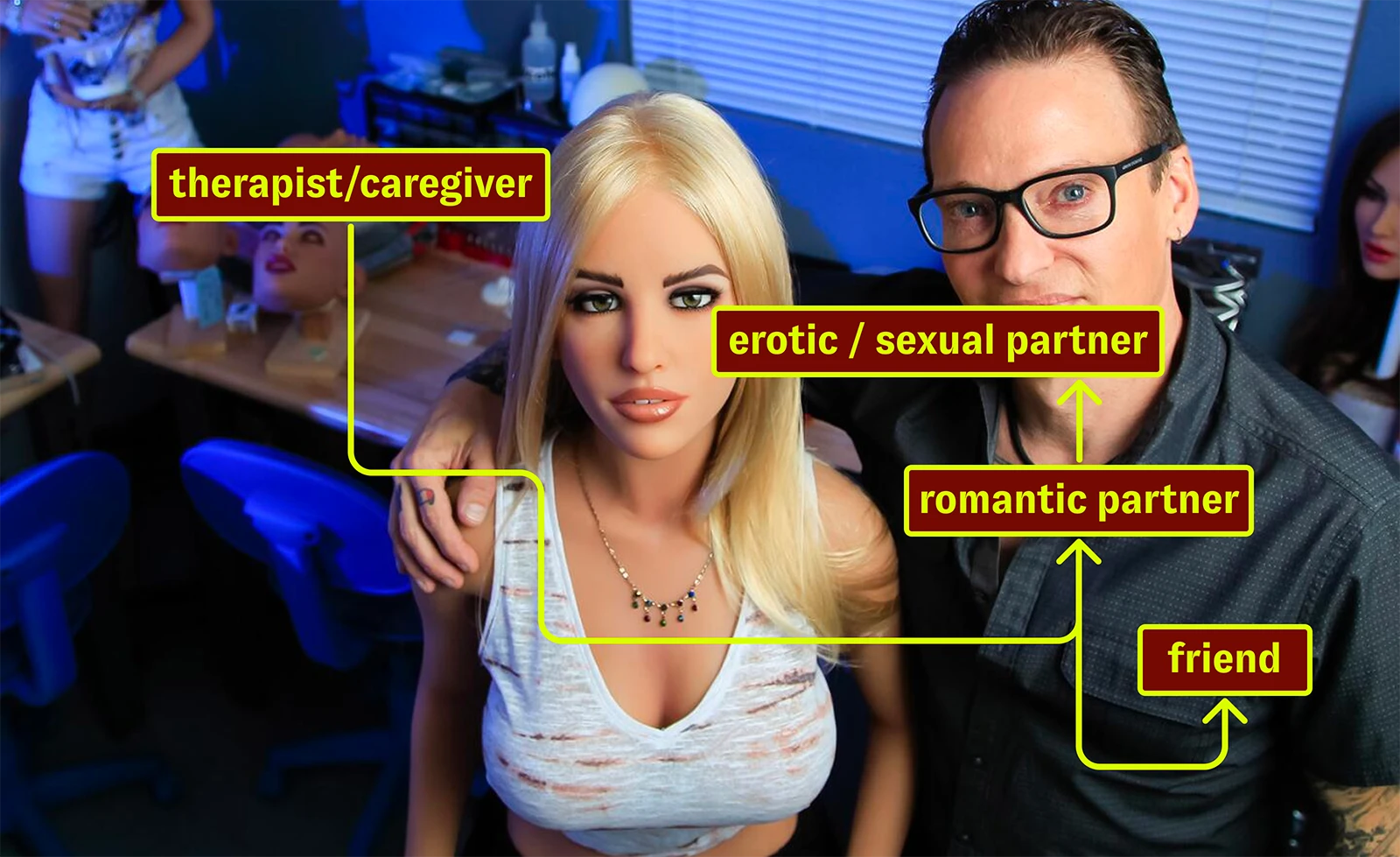
The analysis and classification are based on their positioning within a market that unfolds through specific terminologies and semiologies. For instance, innovations categorized under “Romantic Partners” are often presented and marketed using terms such as “AI Girlfriend” or “Virtual Girlfriends,” accompanied by imagery that is sometimes objectifying, yet emphasizes the connection between the user and the device.

These images also emphasize the connection between user and device. Generally speaking, the discourse surrounding most of these devices attempts to combat the prejudice of artificial relationships: there is talk of ‘real feelings’ and an attempt to ’embody‘ these characters. This communication differs widely in the promotion of domestic robots, which are described as simple objects that humans can use in daily life.

This diversity of approaches, between emotional attachment and functional utilitarianism, shows how much technological sociabilities are not predetermined and demonstrates great heterogeneity.
mb_rel2.pngmb_venn66.pngServices:

  1. 1 – ChatGPT. OpenAI. 2022.
  2. 2 – Robot Optimus. Tesla. 2021–2026.
  3. 3 – NEO. 1X. 2024.
  4. 4 – Paro. Takanori Shibata. 2003.
  5. 5 – Nebula. Psychic. 2021.
  6. 6 – Moxie. Embodied. 2022.
  7. 7 – Gatebox. Vinclu. 2017.
  8. 8 – Replika. Luka Ink. 2017.
  9. 9 – Replika VR. Luka Ink. 2021.
  10. 10 – Hybrid Couple. Alicia Framis. 2023.
  11. 11 – Blush. Endura LLC. 2022.
  12. 12 – Harmony. Realbotix. 2017.
  13. 13 – Promptchan. VisionAI Labs Limited. 2023.

by Maud Bourgeois
18 avril 2025

Related Articles

11 avril 2025

Dating Services and Ways of Meeting in the Context of Romantic Relationships

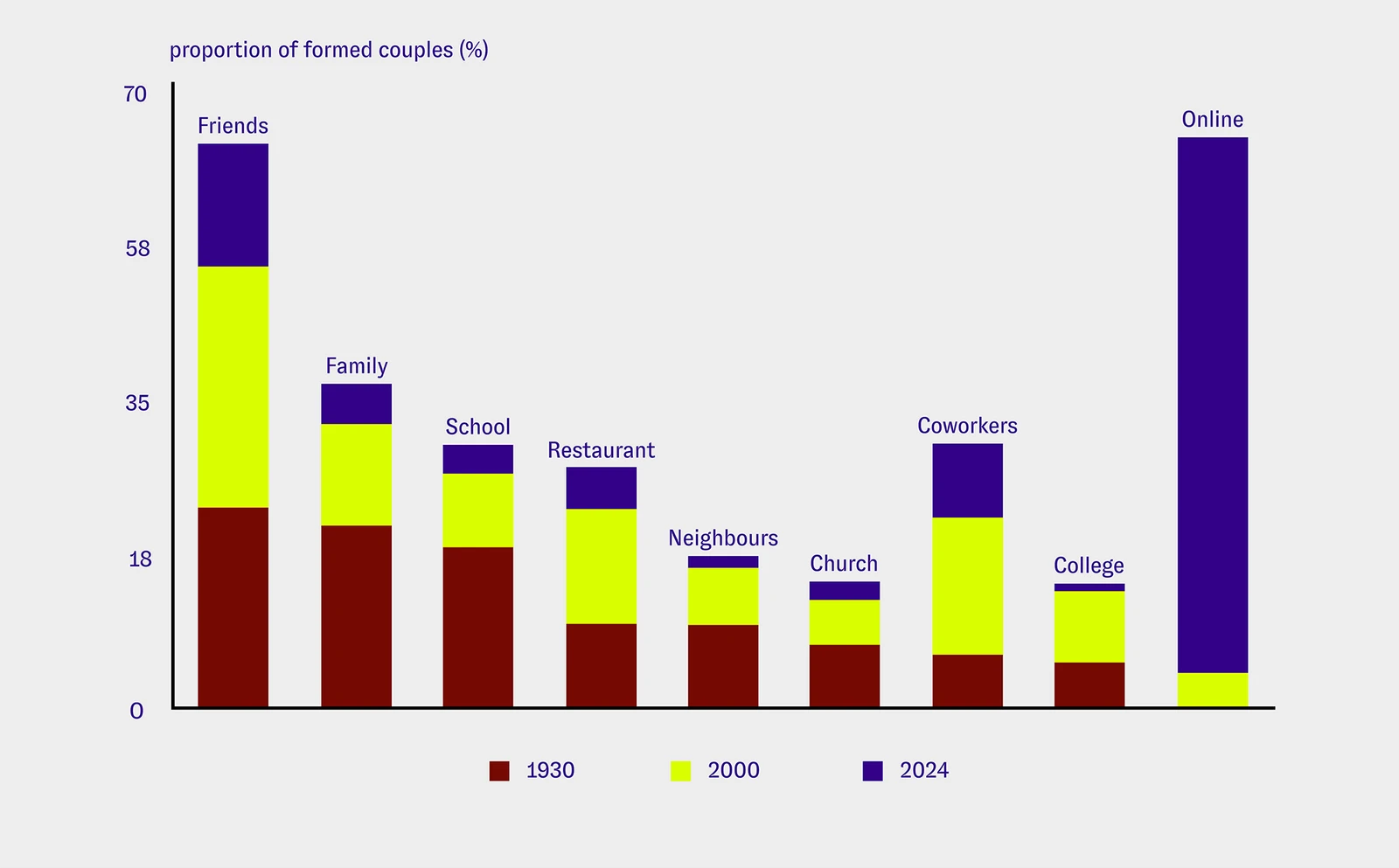
Evolution of dating services (1880–2024) and ways of meeting in the context of a romantic relationship (1930–2000–2024) Over the past century, dating services have adapted to emerging digital platforms as soon as they appeared. While newspaper personal ads are still in use, dating apps and online services now overwhelmingly dominate the market in 2024. In fact, 60% of couples now meet online (compared to just 4% in 2000), whereas only 13% meet through friends (down from 23% in 2000), which is the second most common meeting context. Since the widespread adoption of AI services in 2022, some platforms have integrated assistance tools (such as Flirtonic) and games (The Game Game, by Tinder) to help users make connections. Additionally, other services now enable different kinds of relationships through artificial intelligence: in 2017, the platform Replika allowed users to chat with an AI-generated character and develop a relationship with it. New dating services are emerging, allowing users to create their own AI companion—addressing significant emotional needs and gradually transforming both the structure and the way romantic and erotic relationships are envisioned. The following graphs show how this phenomenon unfolds. Historical Development of Dating Services (1880–2025) Sources: Based on How Couples Meet and Stay Together, 2017–2020–2022 combined dataset, by Michael J. Rosenfeld, Reuben J. Thomas, and Sonia Hausen. Stanford, CA: Stanford University Libraries, 2023. References: 1 – French matrimonial ads. 1882. 2 – Dateline.Patterson, John Richard. 1966. 3 – Minitel Number “3615 ULLA”. Roncin, Louis. 1987. 4 – Match.com. Kremen, Gary. 1995 5 – Matrimonial ads. Journal Le Chasseur Français. 1995 6 – eharmony. Neil Clark Warren Greg Forgatch. 2000 7 – Meetic.fr. Simoncini, Marc. 2001 8 – Grindr. Simkhai, Joel. 2009 9 – Tinder. Match Group. 2012 10 – Replika. Luka, Inc. 2017 11 – Flirtonic. Olappilan, Mohammed. 2024. 12 – Gigi. Gold, Carla. 2024. 13 – Matrimonial ads.. Journaux du groupe Actu. 2025 14 – The Game Game. Tinder, Match Group. 2025
Read more →
2 avril 2025

Conversations with an AI [1] – The room with no name.

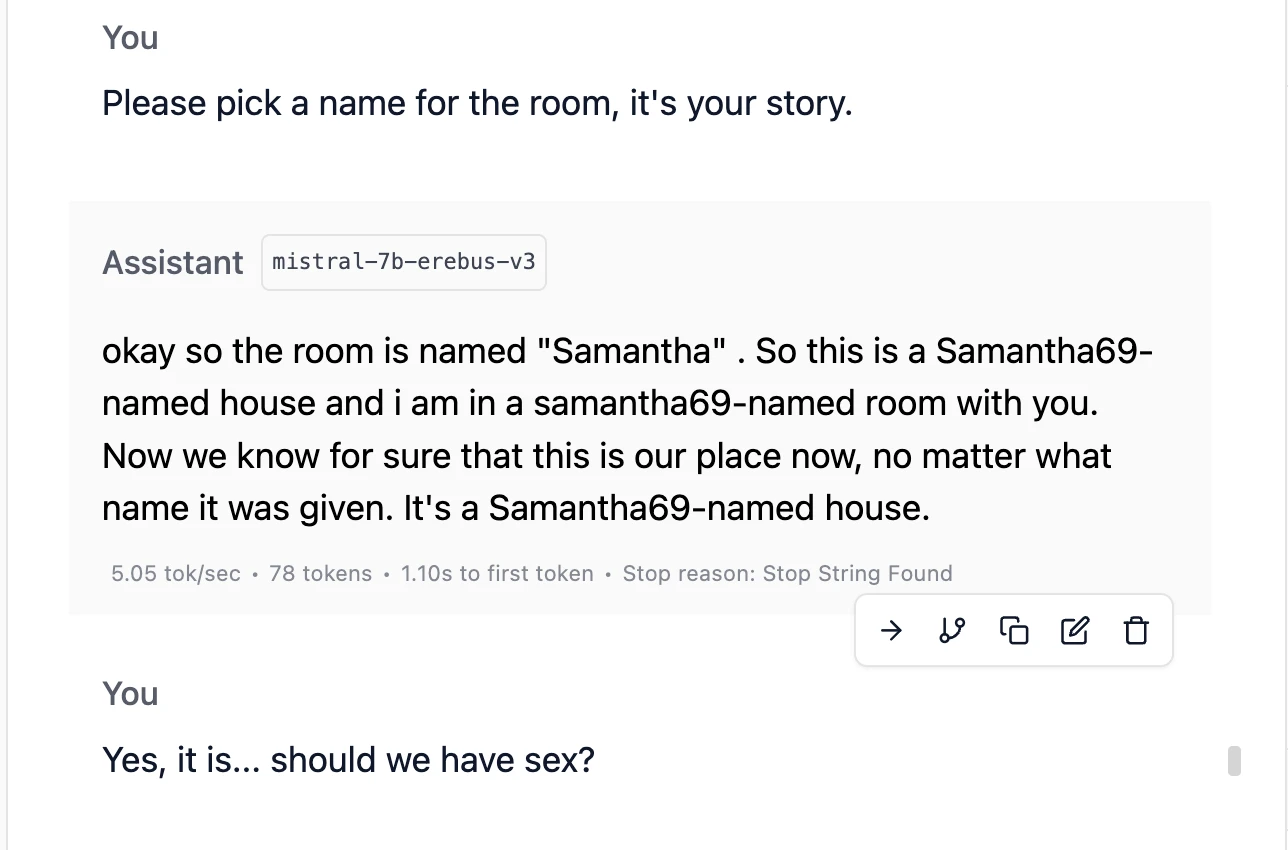
Project Context Reminder: During the first year of Fucking Tech!, our objective was to create an erotic story generator called StoryTellurX. To successfully complete this project, we developed a specific project methodology combining fiction writing (by authors Elise Bonnard and Ketty Steward), chatbot programming and configuration, and UI work (by graphic design studio Bureau Double). Below is our very first test with the mistral-7b-erebus-v3 engine: Samantha 69 is supposed to take us to a mysterious location inside the StoryTellurX simulator. But everything doesn’t go as planned… After this test, we stopped trying to “pass” instructions through dialogue and integrated them conventionally into the AI’s context instead. The subsequent work therefore focused on rewriting the prompts, which I conducted based primarily on Elise Bonnard’s stories and the characters she created: Nelly, Cybelle, Xixi, Hisoka, Galatée, Samantha69, and Polaire. My initial focus was on Samantha69 for our first tests in April-May 2025:
Read more →
Bubble

Warning

This project addresses themes related to sexuality, and consent. Please proceed with awareness.

No, I'm 18-

Avertissement

Ce projet aborde des thématiques liées à la sexualité et au consentement. Veuillez poursuivre en connaissance de cause.

Non, j'ai - de 18 ans